

As of January 1 this year, Chile’s Superintendence of Higher Education began implementing a new general regulation on Healthy Coexistence and Mental Health Protection in Clinical Training Sites. The regulation establishes a series of obligations for higher education institutions that offer undergraduate health programs, with the aim of safeguarding these areas for students completing clinical placements in public and private centers.
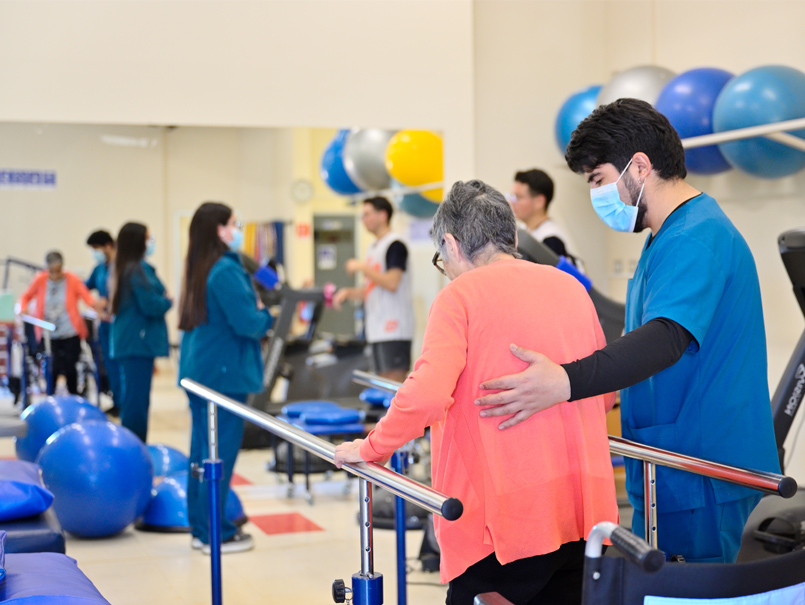
In this context, the Academic Vice-Rector’s Office of PUCV had previously developed joint work with the academic departments that operate in clinical training sites, collaborating in a coordinated manner with the programs of Medical Technology, Kinesiology, Psychology, Biochemistry, and also with the new Chemistry and Pharmacy program, which will begin in 2026.
Academic Vice-Rector Claudia Mejías highlighted that the University has assumed responsibility for the new regulation, complementing it with training and prevention initiatives that had already been underway with students. These efforts have received strong support from the Clinical Training Sites Management and the Student Affairs Office, particularly in matters related to mental health.
“For some time now, our professional programs linked to clinical training have included components related to mental health, which have been reflected in courses and seminars for students and faculty. The law introduces new requirements, but PUCV already has prior experience in this area. Within our Educational Model, students are at the heart of the University, and several actions had been implemented long before this regulation,” she added.
Scope of the Regulation
The general regulation on Healthy Coexistence and Mental Health Protection in Clinical Training Sites is mandatory for universities, professional institutes, and technical training centers that educate undergraduate students in professional or technical health-related programs through internships, placements, or clinical rotations. The regulation emphasizes the role and position of students, incorporates a Human Rights perspective, adopts a gender approach, promotes respectful treatment and non-discrimination, and establishes protection measures for victims. It also encourages timely case resolution, guarantees access to reporting and defense mechanisms, and strengthens prevention strategies, among other aspects.
In line with these guidelines, PUCV has strengthened prevention in clinical training sites through faculty and tutor training, the implementation of student induction processes, and the reinforcement of preventive monitoring mechanisms. In addition, an institutional system will be implemented for the submission, registration, and processing of complaints, in accordance with the principles of due process, timeliness, and interinstitutional coordination.
Furthermore, special emphasis will be placed on institutional psychological support and student well-being services during clinical training, with formal mechanisms for reporting, follow-up, and communication with the Superintendence of Higher Education, in compliance with the deadlines and specifications established by the regulation.
By Juan Paulo Roldán
Strategic Communications Office