


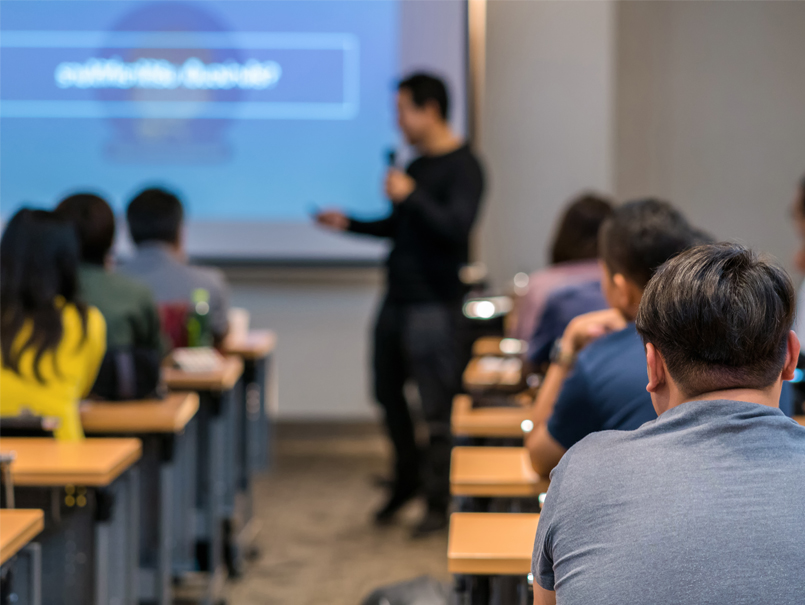
The growing incorporation of Artificial Intelligence tools in higher education is profoundly transforming teaching and learning processes. In this context, PUCV recently presented an academic study focused on the psychoeducational effects of AI use among university students, with special emphasis on mental health and cognitive load.
The study, conducted by faculty members from the School of Business, seeks to move beyond traditional indicators of academic performance. As researcher Rafael Mellado explained, the focus is not only on grades or learning outcomes, but also on variables such as motivation, stress, cognitive load, and students’ psychological well-being.
Within this framework, the research aims not only to improve educational processes, but also to contribute to the development of informed public policies capable of balancing technological innovation, student well-being, and institutional responsibility.
“What we do is measure the effect of Artificial Intelligence use across multiple dimensions that are often left out of traditional educational analysis. Broadly speaking, it is a study on mental health and psychoeducational aspects,” Mellado stated during the project presentation.
Findings
The findings obtained so far show mixed results. On the one hand, the use of AI facilitates tasks such as memorization, information searching, and the automation of certain academic processes. However, researchers warn that its intensive use in activities requiring complex reasoning may negatively affect student well-being by increasing cognitive load and stress levels.
In this regard, Mellado noted that the results have been “revealing” for the research team, as they have confirmed a significant impact on university teaching. “This has not only led to publications in high-impact international indexed journals, but also to concrete outcomes in community engagement,” he added.
The research relies on various technological tools. In its initial stage, the analysis was conducted through virtual assistants operating on platforms such as Telegram, WhatsApp, and Facebook Messenger. Currently, the team is working with large language models such as ChatGPT, Google Gemini, and Microsoft Copilot, which has expanded both the scope and depth of the collected data.
For his part, academic Antonio Faúndez emphasized that understanding these effects is essential for designing appropriate university policies.“Institutional policies must be oriented toward learning outcomes, and for that it is crucial to understand how these tools impact, especially, students’ mental health,” he stated.
Beginning of the Research Work
Faúndez recalled that work with Artificial Intelligence at the School of Business began in 2018, allowing the team to observe its evolution from a longitudinal perspective. This long-term follow-up has been key to identifying risks and opportunities, as well as anticipating the challenges higher education faces in the rapid expansion of these technologies.
Both researchers agreed that rigorous data collection and analysis are essential to move forward. “Without solid evidence, developing institutional policies can become a risk,” Faúndez warned, emphasizing the need to make decisions based on scientific research.
For Mellado, the technology has not yet reached maturity. “We are in a stage of rapid change, with a great deal of uncertainty, in which it is still unclear what can truly be consolidated. Maturity comes when changes are no longer so abrupt. Therefore, we cannot yet clearly define the stable resources that our students will be able to use,” he explained.
The project’s impact has also extended beyond the university context. Its results have been used by public institutions such as the Chilean Internal Revenue Service, reinforcing its cross-cutting nature and its contribution to the discussion on the responsible use of artificial intelligence in different sectors.
By Sebastián Paredes
Strategic Communications Office


